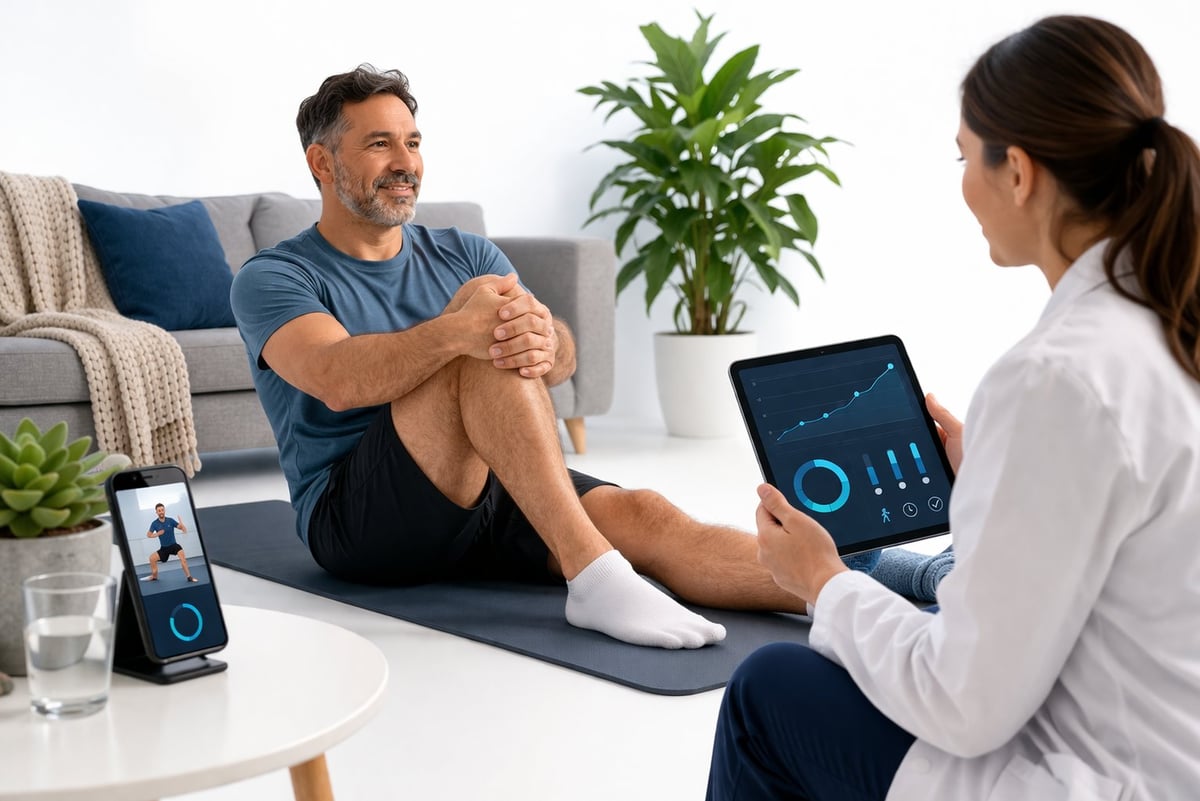
Traditional pain management often relies on subjective patient-reported feedback that leaves clinicians with limited visibility between visits. OrthoRPM enables objective tracking of activity, adherence, and functional improvement, providing data-backed insights that support better clinical decisions, improve patient accountability, and ensure continuous monitoring outside the clinic.
Deliver guided rehabilitation programs designed to support chronic pain reduction and functional improvement across a wide range of conditions.
Monitor how consistently patients follow prescribed therapy, a key driver in pain reduction outcomes and long-term functional recovery.
Maintain continuous visibility into patient progress between visits without requiring constant in-clinic appointments through our remote pain monitoring platform.
OrthoRPM's chronic pain rehabilitation platform supports a wide range of pain-related conditions across orthopedic and post-operative care. From chronic musculoskeletal pain to post-surgical recovery, clinicians gain the tools needed to deliver structured digital programs that drive measurable outcomes.
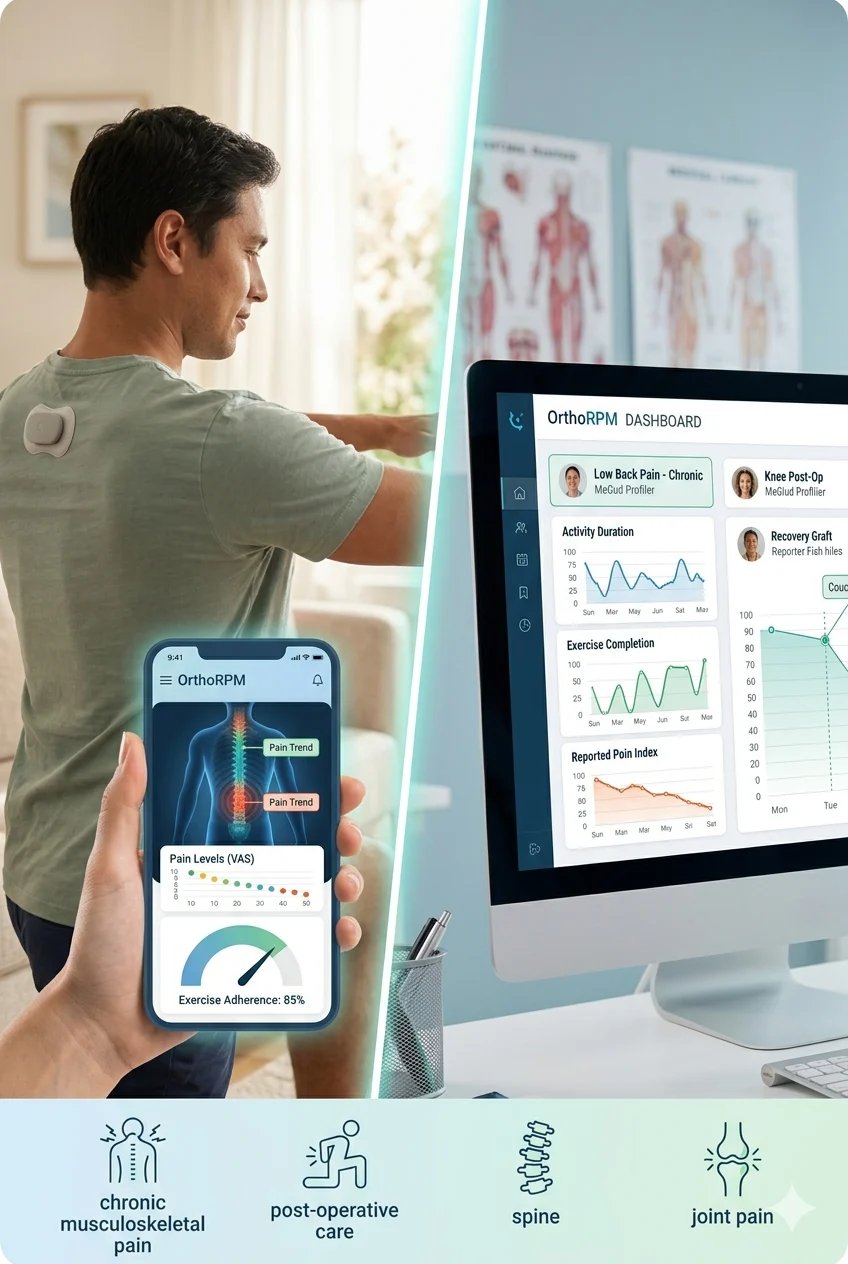
Improving pain outcomes requires more than symptom tracking. It requires visibility into behavior, movement, and consistency. OrthoRPM's pain management software provides clinicians with objective data across all three dimensions, giving a complete picture of where each patient stands in their recovery journey.
Measure how consistently patients complete prescribed therapy sessions, a critical indicator of long-term pain reduction success.
Track improvements in movement, mobility, and exercise performance over time to demonstrate meaningful functional recovery.
Monitor reported pain levels alongside objective activity data to better understand recovery patterns and guide clinical decisions.
OrthoRPM's home-based pain therapy platform is built to deliver better outcomes without increasing clinical overhead. By keeping patients engaged and accountable between visits, reducing reliance on frequent in-clinic appointments, and providing clinicians with continuous remote visibility, practices can scale care delivery efficiently while giving every patient access to structured, measurable rehabilitation from home. The result is a more engaged patient population, a more data-informed clinical team, and a care model designed for the realities of modern pain management.
Improved accountability and motivation through structured digital programs.
Better access to care without requiring frequent in-clinic visits.
More efficient use of clinical resources with remote monitoring tools.
Support more patients without adding proportional clinical overhead.
Deliver structured, measurable rehabilitation programs that improve patient engagement and support better pain outcomes.